
There’s been a quiet shift happening in the way brands connect with people, and it smells surprisingly good.
When Rare Beauty launched its new fragrance in New York this spring, the campaign didn’t rely on digital ads or celebrity selfies. Instead, the brand filled city streets with giant scratch-and-sniff billboards. Passers-by could literally smell the scent, then scan a QR code to order a sample straight to their door.
Simple, but effective. In a world where so much of marketing has become invisible background noise, the idea of using scent – the most emotional of all the senses – feels both nostalgic and refreshingly new. And it highlights something we’ve been seeing for a while across the event world: experiential marketing isn’t just about impact anymore. It’s about measurable, sensory engagement.
The Return of the Senses
For years, most campaigns have competed for the same few inches of space on our screens. Attention spans shortened, algorithms ruled, and creative work became something we scrolled past rather than felt. But the tide is turning.
There’s growing demand for experiences that can’t be replicated digitally, ones that reach people on a sensory level. Scent, texture, temperature, sound – these things ground us in the moment and make memories stick. There’s science behind it, too. Research shows that smell and taste are processed directly by the limbic system, the part of the brain tied to emotion and memory.
We remember what we feel. And when brands create something that taps into that, it lasts longer than a click or a like ever could.
From Theatre to Intelligence
What makes the Rare Beauty example stand out isn’t just the creativity, it’s the connection between experience and measurement. That campaign didn’t stop at “wow”. Each interaction linked to data capture through the QR code: how many scans, how many samples ordered, how many follow-up purchases.
It’s a reminder that experiential can be both magical and measurable. Once seen as the ‘creative extra’ after strategy, experiential is now at the heart of performance marketing, not because it’s louder, but because it’s more personal.
When done well, a sensory activation collects valuable first-party data in a way that feels organic. People choose to engage. They volunteer information because the interaction is worth their time. That’s the sweet spot – emotional resonance that leads to actionable insight.
Luxury Has Joined the Senses
This shift isn’t limited to beauty or lifestyle. In luxury, the senses have always been part of storytelling, but they’re being used with new intent.
Take Diptyque’s Maison concept in London, which reimagines what a store can be. It’s part gallery, part café, part fragrance library, a space designed to be experienced rather than shopped. Guests can smell, touch and even taste the brand world, moving through curated rooms where scent mingles with light, art and sound. There are no loud sales pitches or neon calls to action. The interaction itself is the marketing.
It’s a quiet, confident approach that says: if you’ve created something beautiful enough, people will share it for you.
For event professionals, this represents a wider movement – from spectacle to substance. Immersive doesn’t have to mean overwhelming. It can be thoughtful, sensory and highly controlled. The measure of success isn’t how many people saw it, but how deeply they connected with it.
Designing for Feel, Measuring for Value
At Noble, we’ve always believed that great experiences live in the balance between design and data. The best events don’t just look good; they work hard.
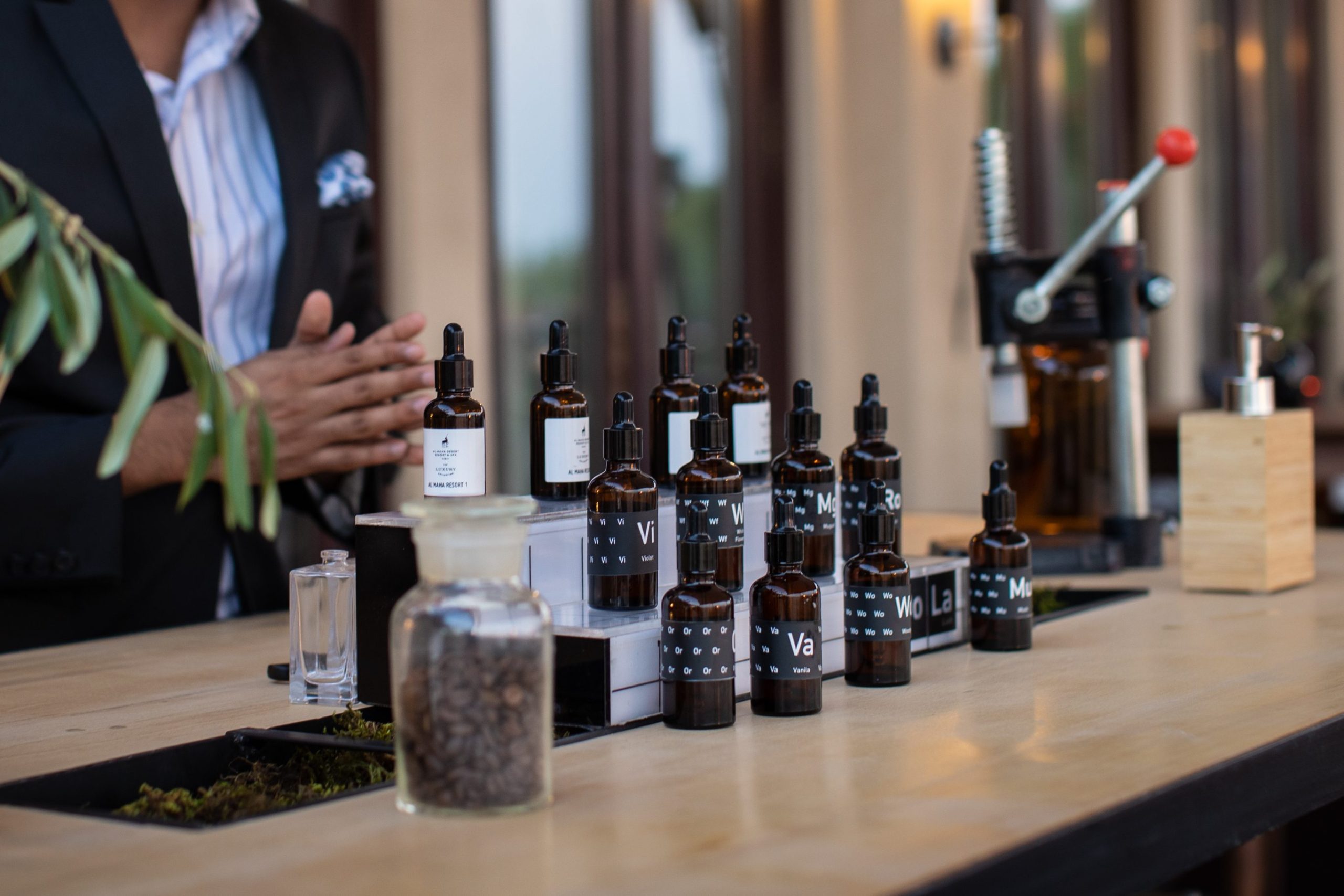
When we build sensory or experiential elements into a programme, whether that’s a bespoke scent at registration, the sound design of a brand space, or tactile finishes that reflect product craft – we start with intention. What feeling should this trigger? What action should it inspire? And how do we measure that action in a way that feels natural to guests?
That might mean QR-enabled sampling, personalised content follow-ups, or integrated CRM capture that doesn’t interrupt the flow of an event. The key is transparency and consent. People are happy to share data when they feel they’re part of a considered experience, not a transaction.
We’re also careful to keep the focus on sustainability. Multi-sensory doesn’t have to mean multi-material. Reusable builds, eco-certified scent diffusion and digital sampling tools can make sensory storytelling both responsible and memorable.
From Screen Fatigue to Physical Connection
It’s hard not to notice the wider backdrop. We’ve probably reached peak social media, or at least peak scrolling. Studies from Ofcom and the FT suggest time spent on social platforms is flattening or falling, particularly among younger audiences.
That doesn’t mean people are less engaged; it means they’re more selective. Audiences want authenticity and human connection, things that can’t be faked by filters or algorithms. Experiential delivers that. It makes brands feel tangible again.
In that context, sensory design isn’t a gimmick. It’s a way to rebuild the emotional currency that digital has eroded. The brands investing in real-world experiences now aren’t retreating from technology; they’re integrating it. They’re turning physical interactions into digital relationships built on trust.

The Next Chapter of Experiential
We’re entering a new phase of experiential design, one that’s more intelligent, more sensory, and more accountable.
It’s no longer enough to fill a space with light and sound. The question is: what does this moment make someone feel, and what does it help them do next?
That could be scanning a code, signing up for a newsletter, or simply walking away with a stronger impression of who you are as a brand. The metrics are shifting from vanity to value – from reach to resonance.
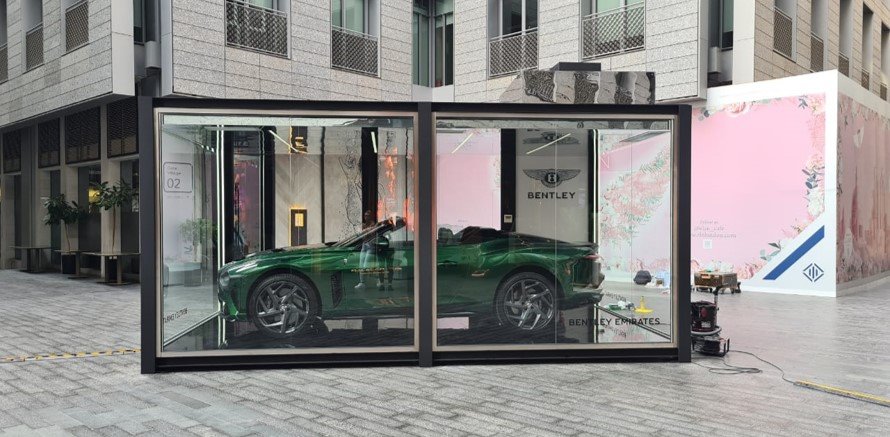
We see this change across sectors. In automotive, it’s the sound of an engine paired with the hush of a high-altitude circuit. In hospitality, it’s scent trails and acoustic design that set the tone before a single plate arrives. In finance or tech, it’s quiet environments where people can think, focus and connect, proof that sensory doesn’t have to mean loud.
Where Emotion Meets Insight
As sensory activations become more sophisticated, they’re also becoming smarter. Technology like ambient sensors, NFC triggers and AI-driven analytics can now turn physical interactions into real insight. But technology is only ever the enabler, the magic still comes from human creativity.
That’s where experiential excels. It makes strategy visible, tangible, and felt. It bridges the emotional and the measurable.
And in an era where attention is harder to win than ever, the senses might just be the strongest data source we have.
Ready to shape something more experiential? Lets talk.